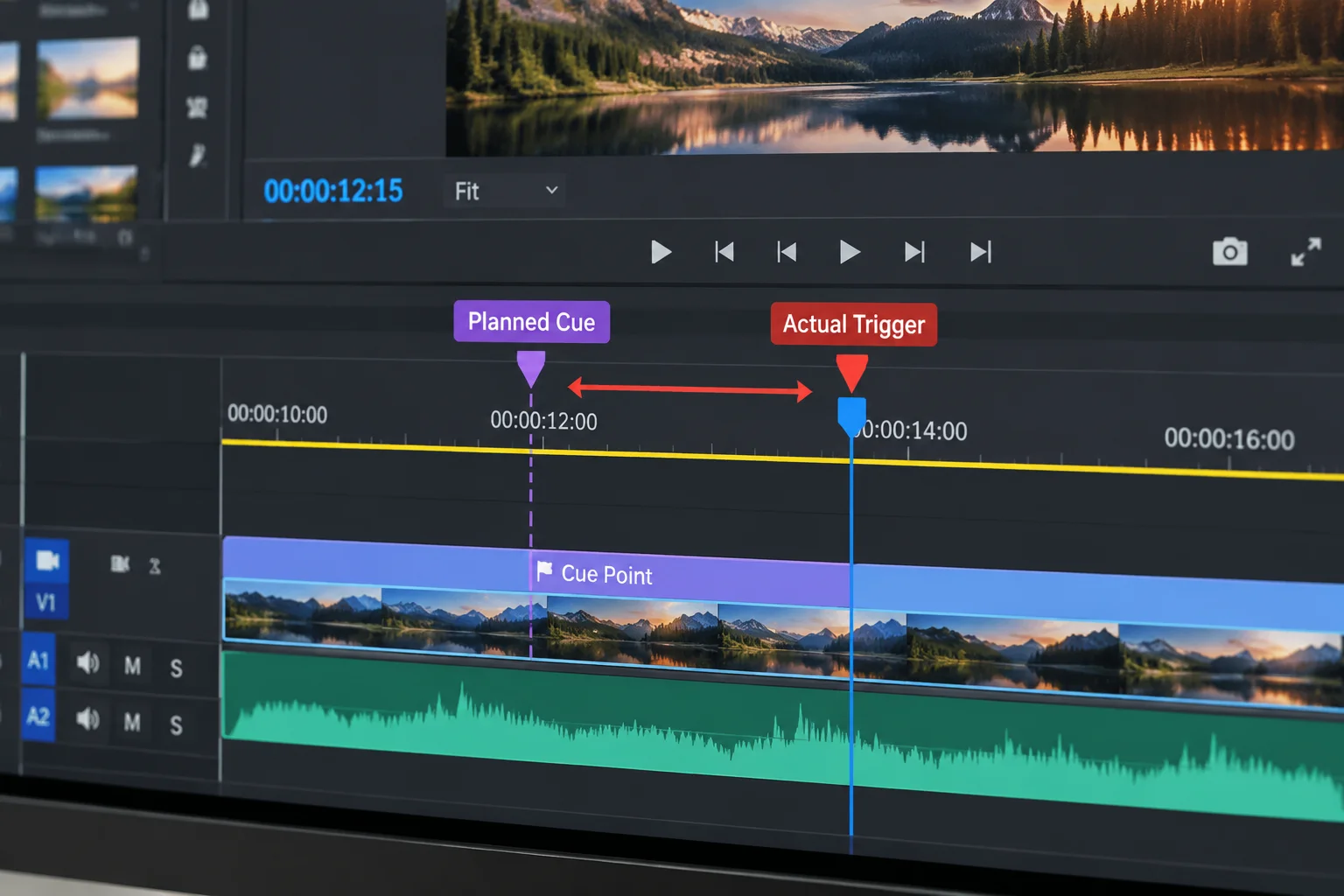
The Core Collision Between Purpose and Execution
In standard rehearsal environments, operators frequently log cues simply as an entry on a chronological timeline. When a speaker walks toward the lectern at three minutes into a block, the trigger gets marked at that specific point. But this practice conflates two completely separate requirements: the structural intention of the look and the fluid reality of live stage presence. If the presenter strides out forty seconds early, a time-locked cue creates instantaneous hesitation in the control booth.
Treating a cue as an independent objective decouples the show intent from rigid clock references. An intent specifies which graphics, lighting presets, and confidence monitors must activate to achieve the intended room impact. Timing merely represents the manual or automated trigger method chosen for that specific run. When these two concepts remain distinct in the cue register, the technician behind the desk can evaluate deviations rationally rather than scrambling through timestamp offsets.
Why Combined Cue Data Fails Under Pressure
Most live control breakdowns occur during unscripted pauses or early starts. When a cue register combines intent and trigger time into one non-negotiable field, secondary operators struggle to diagnose why a preset did not fire. Did the audio feed trigger fail, or was the operator intentionally waiting for the speaker to acknowledge the video wall? Without visible separation in documentation, guesswork takes over the control position.
Documenting cue intent as a standalone entity provides instant diagnostic clarity. It enables the team to assign primary triggers—such as a specific spoken phrase or visual gesture—alongside fallback manual triggers. If the primary trigger never occurs because the host improvises their opening monologue, the operator still understands the visual goal and executes the transition manually without disrupting the audience experience.
Workflow Distinction Metrics
- Primary Risk Factor
- Conflating timestamps with visual objectives
- Operational Benefit
- Instant fallback agility during unscripted stage shifts
- Register Architecture
- Dedicated fields for intent, cue trigger, and time window
- Rehearsal Verification
- Simulating early and delayed speaker cues across blocks
Establishing Intent-First Documentation Standards
Building an intent-first register requires dividing each line item into three explicit criteria: what needs to appear, what event authorizes its execution, and the approximate expected window. Rather than writing '09:42:15 - Lower Third Graphic', the entry specifies 'Lower Third Graphic: Introduce Keynote Speaker', triggered upon 'Host speaks speaker name', with an estimated window of 'Block 01 opening (approx. 09:40 - 09:45)'.
This structural clarity transforms handover reliability between primary and relief operators. The relief technician no longer needs to decode cryptic timestamps or fear sudden schedule compressions. The operator focuses on stage cues, visual readiness, and clean transitions, ensuring the production maintains pristine rhythm regardless of unexpected stage developments.