Production Manual Stage Incident Protocol

When the Speaker Starts Early

Field strategies for frontline video desks when a presenter enters the stage ahead of schedule, bypassing bumpers and forcing sudden cue resynchronization.

Date: 2026-10-18
•
Author: Sarah Jenkins
•
Reading Time: 6 min read
EXECUTIVE SUMMARY
PROTOCOL // CUE-REGISTER

Key Takeaways

  • 01

    Avoid playing queued intro stings or audio bumpers once the presenter begins speaking into the microphone.

  • 02

    Switch display outputs directly to the speaker title card or initial deck slide using a clean dissolve transition.

  • 03

    Broadcast an immediate verbal override across intercom channels so lighting and sound operators halt pending automated sequences.

  • 04

    Mark intermediate introductory rows in the run of show as bypassed to protect downline timekeeping accuracy.

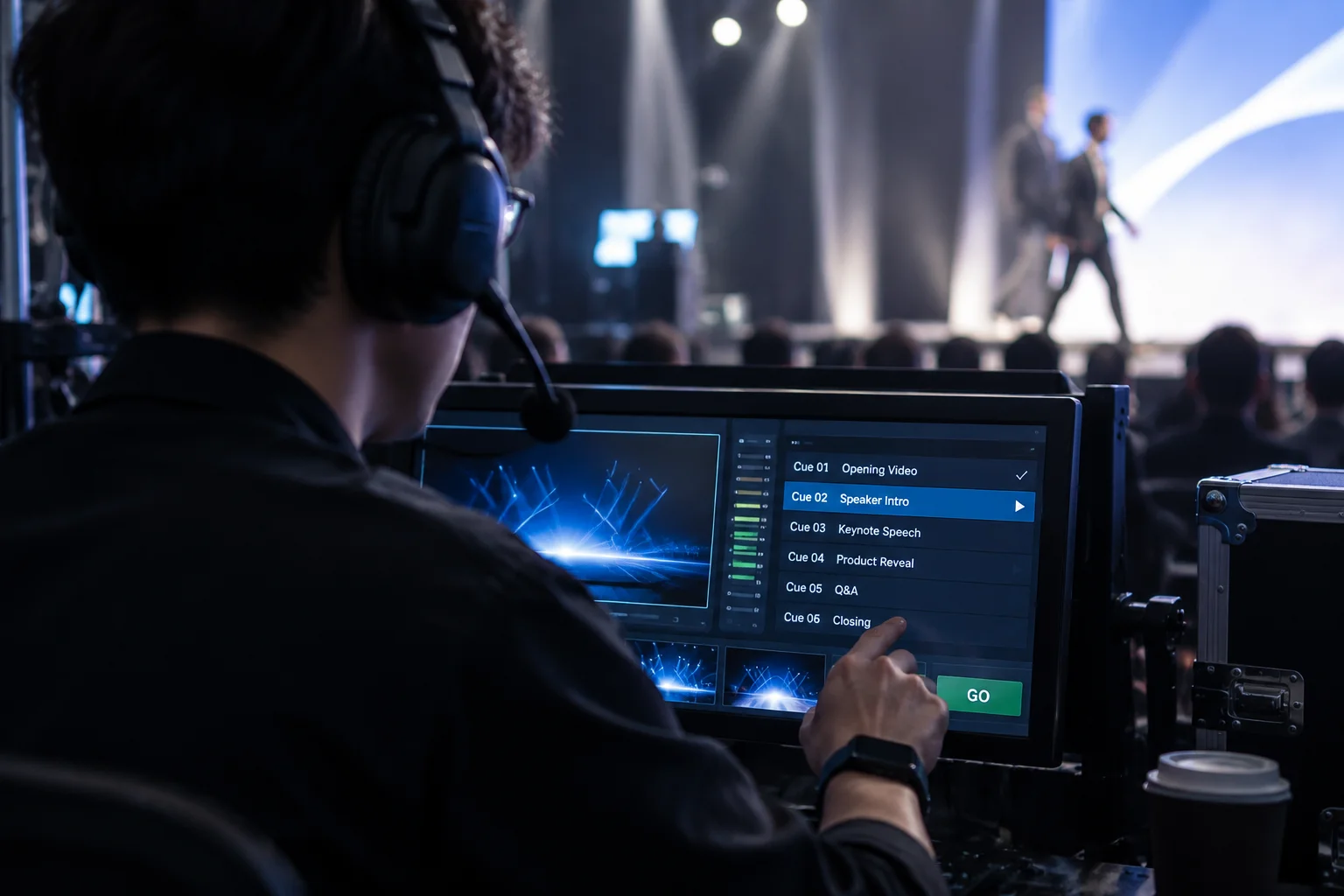
A live event operator quickly adjusting a digital cue system as a speaker walks onto a stage.
Rapid desk recalculation during an unannounced keynote entrance FIG. 01 • REHEARSAL VERIFICATION

Immediate Stage Reality Over Planned Playlists

Live events frequently experience timing discrepancies caused by human initiative. An enthusiastic presenter may misread a backstage green-room monitor, interpret a host thank-you as an entrance cue, and walk directly onto the stage while countdown clocks still show forty seconds remaining.

When physical presence collides with automated show software, stage reality dictates desk action. Running an animated entrance sting over an active speaker confuses the audience and undermines presenter confidence, meaning all pre-roll items must instantly drop in priority.

Executing the Cut-to-Presentation Procedure

Upon spotting an early arrival, the operator shifts focus from sequential playback to immediate destination landing. Cut immediately to the opening slide of the presenter deck or display their lower-third title card while verifying microphone routing on the audio bridge.

Communicate the status change calmly over the production intercom by announcing that the speaker is on stage and intermediate introduction media should be skipped. Lighting desks must match stage wash levels instantly rather than waiting for automated timeline triggers.

Operational Recovery Benchmarks

Visual Recovery Window
< 1.5 seconds
Skipped Asset Policy
Hard bypass, no tail roll
Intercom Override Code
Stage Live Advance
Downstream Impact
+45s schedule buffer

Protecting Subsequent Schedule Calculations

Bypassing an introduction video salvages audience momentum, but it alters running totals across remaining show blocks. The timekeeper must immediately log the bypassed interval and determine whether the saved duration absorbs prior delays or expands subsequent question intervals.

A clear annotation in the cue sheet marks skipped assets as omitted during live execution, ensuring post-event reviews accurately evaluate technical performance without mistaking quick recovery for operator negligence.

CLARIFICATION PROTOCOLS

Frequently Asked Handling Questions

Never run a commercial bumper over an active presenter voice. Reallocate the mandatory sponsor graphic to the concluding slide frame or intermediate session holding loop instead.

Use the production intercom to confirm the premature entrance in real time, enabling the backstage crew to hold upcoming stage entries and adjust green-room dispatch timing.

Switch the stage confidence display to Slide 1 and start speech timers immediately so the presenter receives accurate pacing signals from their first spoken sentence.

DIRECT OPERATOR CHANNEL

Need Assistance with Dynamic Show Protocols?

Submit situational questions regarding stage transition contingencies, cue bypass strategies, or live desk architectures to our editorial engineers.

CONTINUOUS SEQUENCE

Related Materials & Guides

Browse All Registers →
Structure

A Playlist Is Not the Entire Run of Show

Why static media cues fail to capture physical pacing and unscripted stage contingencies.

Read Study →
Rehearsal

Rehearsing Uncertain Transitions

Techniques for stress-testing operator workflows against unexpected speaker behaviors.

Read Study →
Recovery

Recovering From an Unexpected Pause

How control teams stabilize stage visuals when presentations halt abruptly mid-stride.

Read Study →
Documentation

How to Document a Change in Sequence

Recording on-the-fly cue skips and timeline variations cleanly for post-event analysis.

Read Study →