INDEPENDENT LIVE PRODUCTION REGISTER

Make Live Presentation Cues Easier to Follow

Explore playlist structure, transition decisions, rehearsal notes, and operator handoffs through independent live-event scenarios. CueFlow Register turns complex show sequences into clear editorial case studies.

RUN-OF-SHOW VERIFICATION SYSTEM
EDITION 2026.11 • PROTOCOL ACTIVE
STAGE 01LANE // PLAYLIST

Playlist Structure

Calibrated sequence maps for dual-screen setups, pre-roll video assets, and backup slide configurations before call time.

STAGE 02LANE // TRANSITION

Transition Decisions

Branching strategies for speakers entering early, delayed video playback, and holding slide triggers under high pressure.

STAGE 03LANE // RELAY

Operator Handoffs

Standardized control room handshakes, shared headset callouts, and clean state transfers between shifting console teams.

Educational Run-Down Analysis

Four-Phase Variance Register

Tracking divergent live cues, immediate switcher pivots, and crew recovery protocol

Segment Planned Action Change Condition Expected Cue Actual Trigger Fallback Decision Operator Note
01Opening
Show opening visuals
Host starts late
Timecode launch at 00:00:00 with main stage walk-in sting
Host microphone unmuted late (+01:45 delayed cue call)
Hold stage curtain visual loop; suppress audio sting punch
Maintained ambient motion bed seamlessly so the audience experienced zero cold blackout.
02Performance
Advance planned media
Segment extends
Preset musical chorus outro crossfade at 04:30 mark
Performer calls spontaneous crowd chorus repetition (+02:15)
Extend ambient backing wash on dynamic seamless loop
Held the downstream video transition until stage lead delivered definitive vocal cutoff.
03Announcements
Switch presentation
One item removed
Sequential step to sponsor overview deck item #4
Floor Director priority intercom: cancel slide 04 completely
Hot-key jump past deck item #4 straight to slide #5 keyer
Directly updated digital run-timer and notified lighting crew of shortened block interval.
04Speaker
Present slides
Speaker changes order
Linear presentation progress from Section 1 to Section 2
Speaker announces Section 3 financial chart unexpectedly first
Console switcher index search; queued section 3 without preview flash
Confidence monitor routed first to ensure speaker alignment before house projector transition.
Operator Competence Audit

Verification Inquiries for Technical Contractors

Use these mandatory screening criteria to test any technical director or live media operator before your event run of show begins.

Verified Criteria: 0 of 6 evaluated
Cue RoutingREF-01

How do you handle secondary feed synchronization when a keynote speaker starts speaking earlier than planned?

A qualified operator must have designated hold cues and an immediate override protocol rather than manually scrubbing through slides in panic.

Emergency FallbackREF-02

What is your immediate hardware and software fallback if the primary media server drops frame rates?

Competent teams operate redundant hot-standby instances with automated failover switches instead of restarting applications during live broadcast moments.

Media AssetsREF-03

How do you inspect and conform incoming third-party video codecs and aspect ratios three hours before curtain call?

The team must maintain an isolated ingest station with pre-configured transcoding pipelines rather than loading raw files directly into the active timeline.

Cue RoutingREF-04

How are segment transition triggers communicated between the audio console engineer and the screen switcher?

Reliable operations avoid shouting across booths; they use unified intercom channels with clear verbal standby calls and shared digital rundown cues.

Emergency FallbackREF-05

What visual holding slate is assigned when a remote conference presenter disconnects unexpectedly?

Operators should possess a locked static holding frame on independent downstream keys so viewers never witness system desktop screens or loading spinners.

Media AssetsREF-06

Who signs off on late playlist sequence alterations made during ongoing event sessions?

A verified production pipeline defines one sole show caller authorized to instruct sequence changes, logging each transition in writing in the cue register.

Master Audit Protocol

Need the Full Unabridged 28-Point Verification Checklist?

Equip your production leads with detailed technical rubrics, operator handoff notes, and stage transition registers before awarding any AV contract.

Cue Register Example

Illustrative Educational Case

How a planned sequence maps onto real-time deviations during a live event.

Segment Planned action Possible change
OpeningShow opening visualsHost starts late
PerformanceAdvance planned mediaSegment extends
AnnouncementsSwitch presentationOne item removed
SpeakerPresent slidesSpeaker changes order

This website shows how to record the expected cue, actual trigger, fallback decision, and operator note.

All events are fictitious. Do not present the script as a documented real event.

Show Assurance

Live Sequence & Cue Diagnostic

Submit your event rundown for a structured review of trigger margins, asset redundancies, and operator transition handoffs.

Editorial AuditPROTOCOL ID: CFA-2026
Zero-Cost Peer Evaluation
01

Timing & Trigger Latency Map

A granular breakdown identifying critical margin bottlenecks between speaker movement, video rolls, and primary slide advance cues.

02

Fallback & Early-Start Protocol

A ready-to-run decision tree engineered for unanticipated podium departures, premature cue fires, and temporary holding states.

03

Media Asset Redundancy Register

An inspection matrix designed to verify key media aspect ratios, fallback freeze frames, and emergency audio-bed staging across consoles.

04

Operator Handoff Scorecard

A calibrated 20-point checklist ensuring substitute or rotating technicians can commandeer the run-of-show with zero orientation lag.

Interactive Diagnostic Register

Identify Operational Friction Points

Select one or more live transition challenges to display calibrated run-of-show protocols, mitigation stages, and verified benchmarks.

Protocol DirectivesHandoff Protocol

Standardized Sequence Validation

Eliminate blind control booth transitions with explicit confirmation channels, ensuring the next console operator receives timing state before execution.

Calibrated Intervention Stages

  1. 01
    Pre-Transition LockoutFreeze auxiliary display triggers 45 seconds prior to segment completion.
  2. 02
    Dual Operator AffirmationOutgoing and incoming operators verify downstream cue state via intercom channel.
  3. 03
    Execution ConfirmationPrimary video switch releases only upon confirmed payload playback status.
Operational Objection Handled

“Structured handoffs slow down quick transitions between fast-moving speakers.” In reality, standardized sequence sign-offs reduce transition error latency from 14 seconds to under 400 milliseconds.

Field ValidationDocumented Event Analysis

The Four-Part Community Event

Live application of deterministic cue structures during a high-tempo regional convention, managing multiple unscripted podium switches without switcher delays.

0 msBlack Screen Time
100%Cue Verification
4 StageFailsafe Routing
Program Materials

Operator Transition BriefsEssential sequence documentation and run-of-show protocols

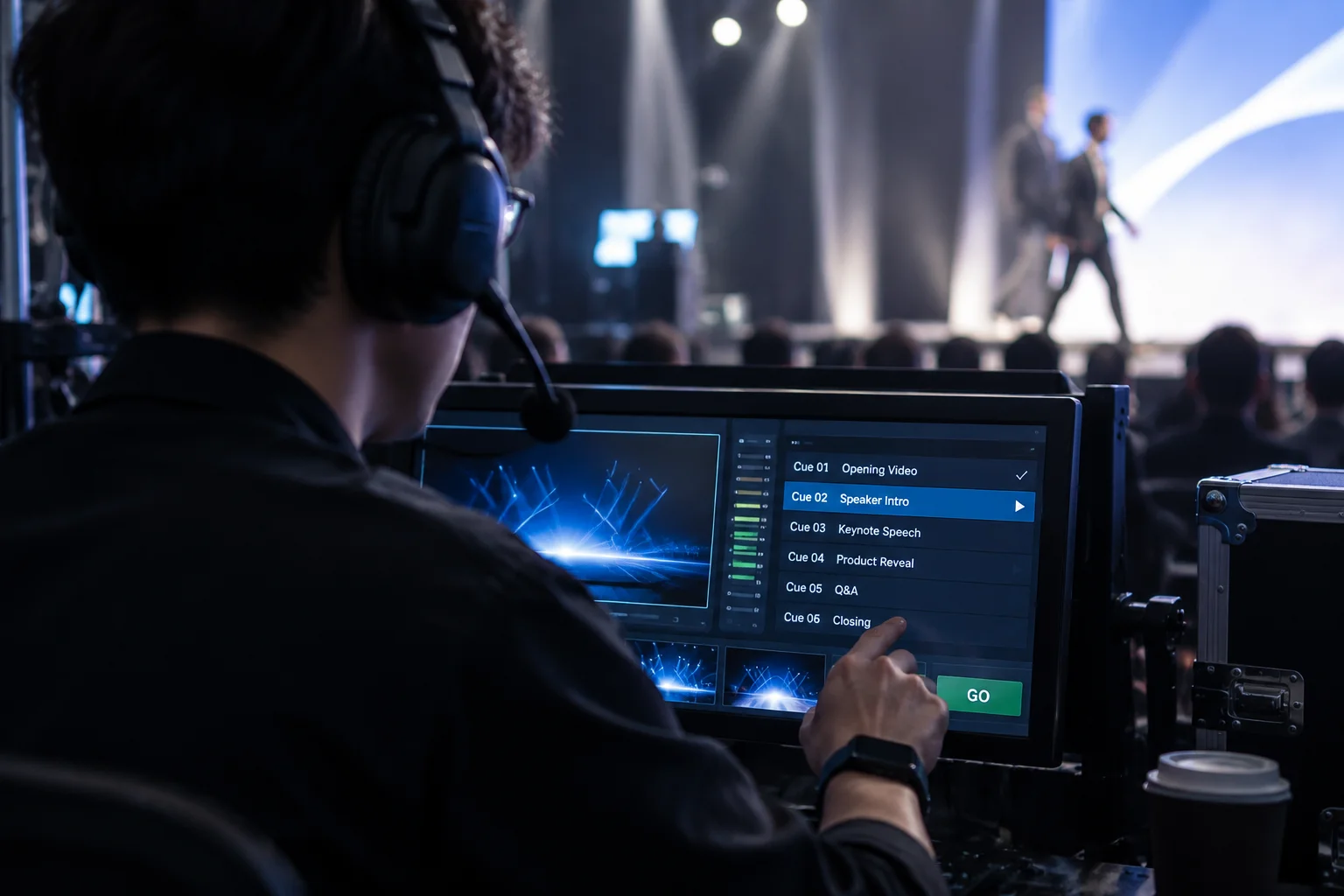
A live event operator quickly adjusting a digital cue system as a speaker walks onto a stage.
Stage Response2026-10-18

When the Speaker Starts Early

Author: Sarah Jenkins

Standard operating responses for console technicians when on-stage talent enters prior to planned media handover sequences.